Fakoyejo Olalekan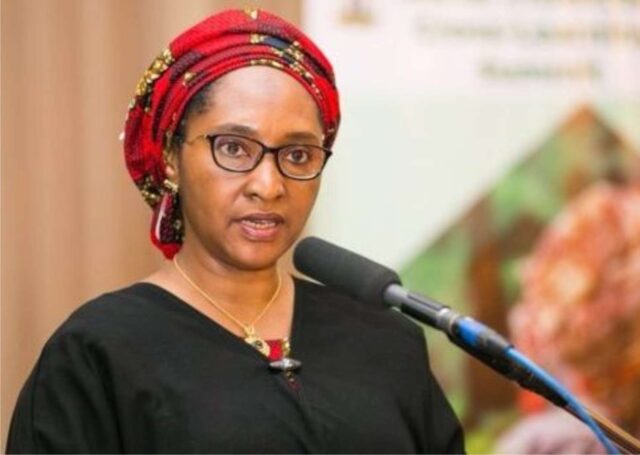
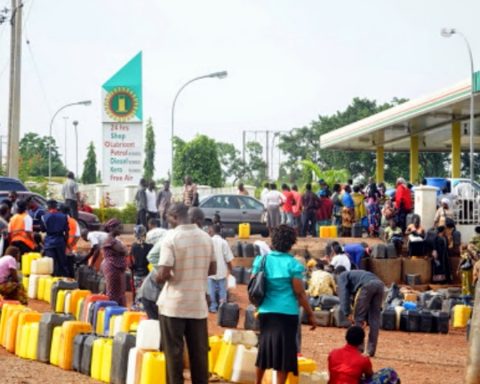
The Minister of Finance, Budget and National Planning, Zainab Ahmed, has disclosed that the Federal Government spent N283 per litre of Premium Motor Spirit (PMS) as fuel subsidy.
This means Nigerian government spends N18.397 billion per day on fuel subsidy to keep the price of petrol low at the retail station, preventing the cost from reflecting market reality.
Join our WhatsApp ChannelRecall that Prime Business Africa had reported that fuel subsidy gulps a large part of Nigerian government revenue, with the government expected to spend N6.7 trillion or N3.36 trillion in 2023 depending on two scenarios; business-as-usual and reform.
Ahmed explains the latest development to the House of Representatives’ Ad Hoc Committee on Thursday, during an investigation on Petroleum Products Subsidy Regime from 2013 to 2022.
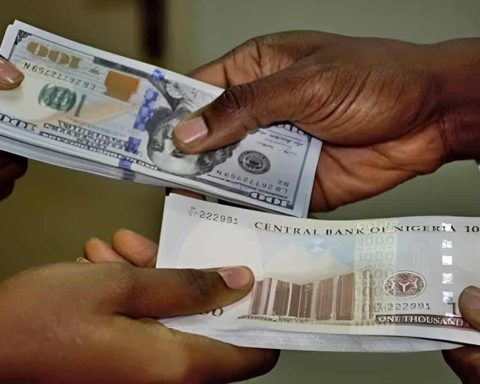
She said, “For 2023, the projection is that the average daily truck out will be N64.96 million litres per day; that is about 65 million per day, using an average rate at open market rate of N448.20k and then a regulator pump price of N165 per litre. This gives us an average under-recovery, that is the difference between N165 and N448 of N283.2k.
“So, just multiply the amount of litre per day, the open market exchange rate of naira to the dollar and then, the gap between the pump price and open market price, the total amount of subsidy per day is N18.397bn.
“So, if you are projecting for the full year, from January to December, it will be N6.715tn. If you are projecting for half a year, it will be 50 per cent of that, 3.375tn. I said earlier in the recommendations that we sent to parliament for consideration on MTEF is half-year, that will be N3.357tn.
“Fuel subsidy is the difference between the pump price which is now fixed at N165 (per litre) and the landing cost which we are projecting at an average of N448 per litre in 2023. Even now, the cost is around that.
“So, the PMS subsidy we are carrying today in the nation is around N283 per litre; that is what we are carrying. So, it is the difference between the pump price and the landing cost of petroleum products in the country.” Ahmed said.
Meanwhile, the World Bank had suggested that Nigerian government should remove fuel subsidy and allow petrol price reflect the market condition, cause only the rich benefit from it.
World Bank’s David Malpass said, “One is that they are expensive because they go to everyone and they are often used by people with upper incomes than by people with lower incomes so they are not targeted.”
He added that, “So, we encourage that when there is need for subsidy, either food or for fuel, that it should be carefully targeted at those most in need of it. And so, we have encouraged Nigeria to rethink its subsidy effort.”