 Dr Gabriel Uguru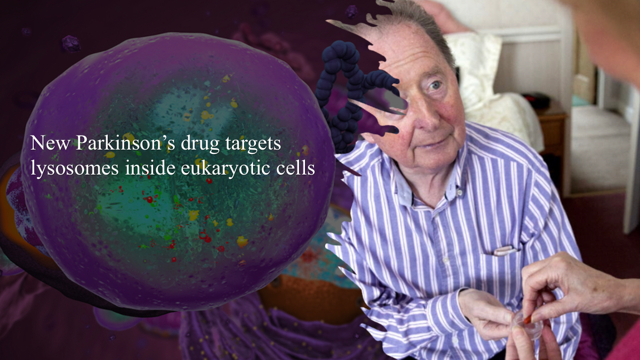
Parkinson’s disease (aka Parkinson’s), is a disease that affects the brain as a result of loss of nerve cells in certain parts of the brain. When cells responsible for production of a chemical neurotransmitter called dopamine stop working or die, the result is a decline in brain function. The classical symptoms of Parkinson’s are uncontrollable shaking, and stiffness due to loss of muscle control.
About 10 million people worldwide are affected by Parkinson’s. A list of famous people with Parkinson’s disease include Mohammed Ali, Billy Graham, Ozzy Osbourne, Michael J Fox, Linda Ronstadt, Billy Connolly, and Neil Diamond, to mention but a few.
Join our WhatsApp ChannelCurrent treatments for the disease include medication, therapies and in some cases surgery. Drugs are only effective in replacing lost dopamine and to a certain extent reducing the symptoms, but ultimately there has not been any drug to help slow or check Parkinson’s destructive progression. The patient’s condition gets worse with time resulting in memory loss and speech difficulty.
Genentech, headquartered in South San Francisco, California, USA, and which merged with the drug giant, Roche, in 2009, recently announced the development of an experimental drug for Parkinson’s. The drug targets the cellular pathway leading to the disease.
‘Am afraid we are going to have to exercise our brain a little to be able to understand things better. There is a gene called the Leucine-rich Repeat Kinase 2 (or LRRK2); leucine by the way is an amino acid. This gene, LRRK2, plays important roles in the body, one of which is to modify a series of proteins called Rab guanosine triphosphates.
These suite of proteins control how proteins move in and out of cells. And it has long been thought that mutations in this gene, LRRK2, which controls the Rab proteins, predispose a person to Parkinson’s disease.
Mutations occurring in the LRRK2 gene, place Rab in a state of high activity, resulting in a reduction of the efficiency of lysosomes. Remember that lysosomes are cellular structures, which contain enzymes that breakdown different types of biological polymers, including carbohydrates, proteins, lipids, and nucleic acids. So, reducing the efficiency of lysosomes means that many unwanted proteins are broken down and recycled. In effect, there is an increase in the accumulation of toxic byproducts that may kill neurones, leading to Parkinson’s.
A drug called, DN201, improves lysosomal function by inhibiting LRRK2 kinase activity, and reducing the activity of the Rab proteins. Thus, DNL201 is primarily, a central nervous system (CNS)-penetrant LRRK2 kinase inhibitor. But this drug in animal models revealed an unwanted side effect. Kidney and lung tissues produce high levels of an LRRK2 protein called dardarin. The drug caused dardarin to increase in size leading to fears that DNL201 might cause side effects in humans.
A study published in the June 2022 issue of Science Translational Medicine, which was aimed at addressing the DNL201 concerns, shows that the drug is safe and does not cause any of the feared side effects in both animals and humans.
The test was conducted in rats, monkeys (macaques), and human volunteers at doses that were safe and generally well tolerated. The aim of the project was to reduce the level of dardarin just enough to restore normal Rab function without completely blocking dardarin function.
The test was conducted for 28 days with single and multiple doses of the drug. The drug in Phases 1 and 1b clinical trials, was found to reduce Rab levels while boosting lysosomal function in animals. Tolerance of the drug without any side effects or lung or kidney issues were seen in 122 healthy volunteers and also in 28 Parkinson’s patients.
Additionally, the drug reduced LRRK2 levels in blood and was found to have robust cerebrospinal fluid penetration (cerebrospinal fluid is a clear, colourless liquid found in the brain and spinal cord).
But it is not yet celebration time for advanced cases of Parkinson’s. The new drug is unlikely to reverse advanced symptoms of Parkinson’s because to do that, damaged or dead dopamine-producing neurones would need to be restored.
A second drug called DNL151, which closely relates to DNL201, and manufactured by the same drug company, Genentech, was also found to inhibit LRRK2 during a human safety trial. It lasts longer in the blood than DNL201, making it a more attractive drug than DNL201, because the frequency of administering the drug could be reduced.
Additional clinical trials of DNL115 are being planned, according to Genentech. The company planned a 48-week administration of the drug to volunteers in order to show that the drug is effective in humans, and that long time administration of the drug does not give rise to any side effects in the body, especially in the lungs and kidneys.
If these additional clinical trials are successful, clinicians will soon be able to start administering the drug to patients with early symptoms of Parkinson’s.