Fakoyejo Olalekan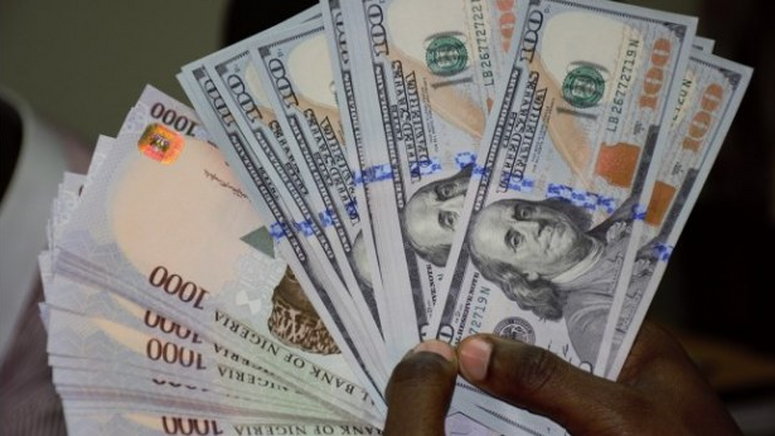
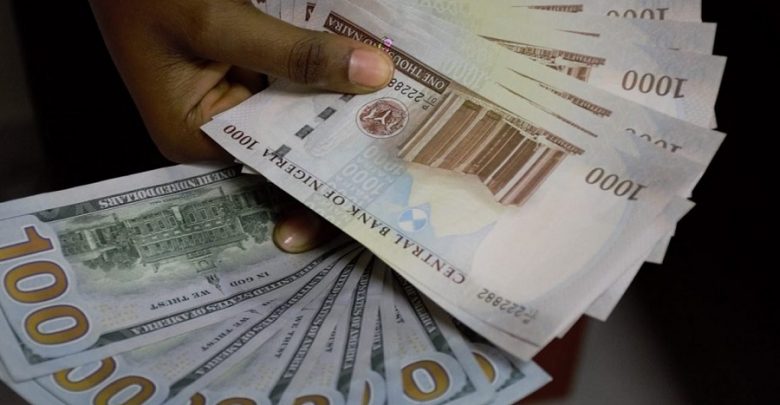
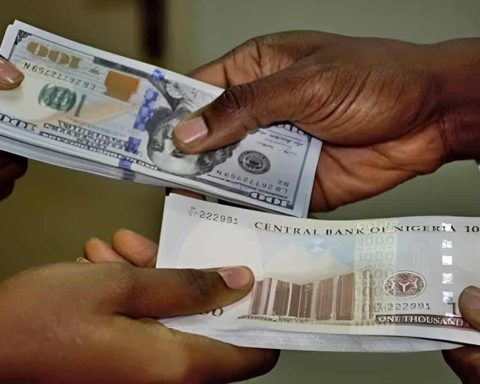
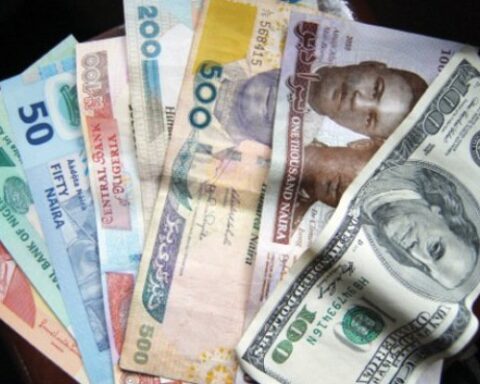
The Naira to Dollar rate in the official market dropped by 0.04 per cent on Tuesday, 25 April 2023, as traders reduced their asking price by N0.23 kobo.
According to data obtained from FMDQ Exchange, the foreign exchange rate closed at ₦463.44/$1 on Tuesday, below the ₦463.67 kobo reported last week Thursday, 20 April.
Join our WhatsApp ChannelThe official market closed on Friday, 21 April, and Monday, 25 April, due to the Eid el-Fitr public holiday announced by the Federal Government.
In the data provided, the foreign exchange rate between the Dollar and the Naira had traded as high as ₦466 and as low as ₦458.04 during trading.
At the end of trading, investors transacted $62.69 million worth of foreign exchange. This is 55.17 per cent lower than the transactions made on Thursday in the Investors and Exporters window.
During the last session in the Investors and Exporters window, traders transacted $139.85 million worth of foreign exchange, which indicates supply dropped by $77.16 million.
The lack of foreign exchange is linked to declining international reserves in Nigeria. It fell by 4.27 per cent or $1.58 billion in the first quarter of 2023.
At the end of last year, foreign reserves reported by the Central Bank of Nigeria (CBN) were $37.08 billion, but at the end of March 2023, they fell to $35.49 billion.
This is on the back of a decline in foreign capital importation in Nigeria, which fell to $5.32 billion in 2022, from $23.9 billion recorded in 2019, according to data obtained from the National Bureau of Statistics (NBS).
The drop in international reserves and foreign capital importation affects the Dollar rate, as scarcity of the United States Dollar (USD) amid high demand will increase the value of the greenback against the Naira.
Amid this, the value of the Naira has dropped by –0.52 per cent between January to April, with the Dollar rate rising by ₦2.44 kobo. The exchange rate was ₦461 at the beginning of 2023, but both currencies exchanged at ₦463.44/$1.
Should the country’s Foreign Direct Investment and Foreign Portfolio Investment (foreign capital importation) continue to depreciate, the scarcity of the Dollar will continue as well, fueling the value of the Dollar.