 Victor Ezeja
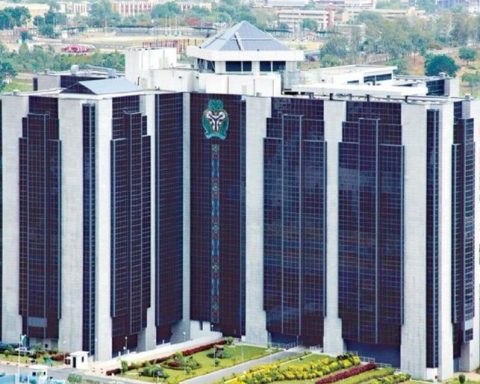
Economic experts have raised concerns about the implications of the decision of the Central Bank of Nigeria (CBN) to further tighten monetary policy on businesses in the country.
The CBN Monetary Policy Committee on Tuesday, increased the benchmark interest rate by 400 basis points to a record 22.75 per cent from 18.75 per cent. The committee raised the Cash Reserve Ratio (CRR) to 45 per cent from 32.5 per cent, and retained Liquidity Ratio at 30 per cent. The committee also adjusted the asymmetric corridor around the MPR from +100 to -700 and from +100 to -300 basis points.
Join our WhatsApp Channel
READ ALSO:
- CBN Raises Benchmark Interest Rate To 22.75%
- Economic Crisis: CBN’s 22.75% Benchmark Interest Rate Good For Tackling Inflation – Moghalu
- Save Naira: CBN Sells $20,000 Forex To BDCs At Reduced Rate Of N1,301/$
While reacting to this decision, Chief Economist and Partner at SPM Professional, Paul Alaje, said the latest monetary policy would have adverse effects on businesses and the economy generally.
He said businesses on bank loans should brace up for rate adjustments in the short term, adding that it may push up the cost of things.
The economic expert also expressed concerns that it could lead to an increase in unemployment within the next quarter.
“Businesses that are on banks’ facilities (loans) should brace up for rate adjustment in the short-term. This may further push costs up and, in case of transferable burden, these costs may be passed to the consumers,” Alaje stated via his X handle on Tuesday.
“Employment will be crowded out (that is, unemployment will increase, this is expected within the next quarter).
“Inflation is expected to grow slowly in spite of the rate adjustment. This is because the effect of cost push is still potent on inflation.”
Highlighting other implications of the latest CBN monetary policy, Alaje said it “may affect the GDP growth rate if the fiscal authority does NOT respond with major capital expenditure within the shortest period of time.
“If FAAC inflows and spendings do not impact the economy as expected, its combined impact with this adjustment in rates may lead to a financial distress in the system, given the reality of current economic quagmire.”
He added that Nigeria’s inflation is not driven by demand but cost and therefore pointed out that merely increasing MPR will not solve the problem, but there is a need to increase supply which comes from scaling up production.
He also stressed that government’s fiscal policies must respond to CBN’s monetary policies in order to achieve the desired effects.
Also commenting on the implications of the monetary policy, MS Ingawa, a policy analyst, said it would affect cost of production for businesses that depend on bank loans for financing, thereby making goods and services more expensive.
He said: “The Monetary Policy Rate (MPR) is the rate the CBN lends to commercial banks. Commercial banks then use this rate as their benchmark rate for their lending.
“It simply means that loans in commercial banks and other lending institutions will be more expensive than it used to be, and goods and services that rely on bank loans (which are the majority) will have to pay more to borrow money for production.
“Being the cost of fund (Interest Charged on Loans) an integral part of production cost, the goods and services will be more expensive. Central Banks increase MPR when the inflation is high so as to limit the inflow of money and credit into the economy.
“In the next few days, banks will notify their debtors of the hike in interest rates on their existing loans.”

Victor Ezeja is a passionate journalist with seven years of experience writing on economy, politics and energy. He holds a Master's degree in Mass Communication.