Admin
Admin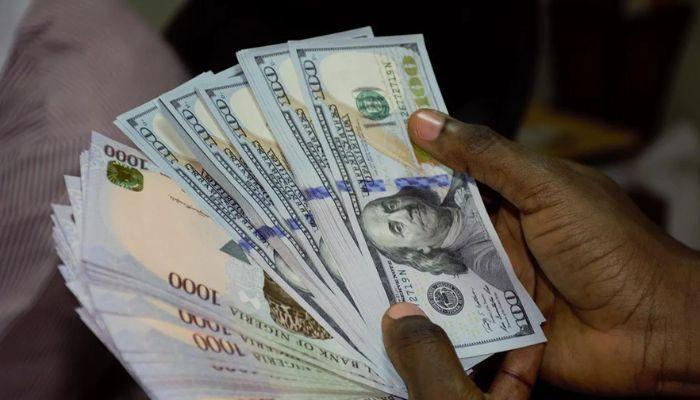
Over the last two decades, Nigeria, the giant of Africa, has confronted a number of economic challenges. Our excessive reliance on imported products and services has resulted in an unstable exchange rate between the US Dollar (USD) and Nigerian Naira (NGN), which has had a substantial influence on the economy of the country.
The Central Bank of Nigeria (CBN) reports the current official exchange rate as:
Join our WhatsApp ChannelBuying rate = N899.266
Selling rate = N900.266
While the exchange rate at the black market is:
Buying rate= N1355
Selling rate = N1360
It is clear that our economy is intertwined, much like spiderwebs, and that one cannot exist without the other. Dollar exchange rate fluctuations rip these webs, impacting everything from the price of goods to the allocation of funds by enterprises.
For Nigeria’s economy, crude oil is by far the main source of export revenue. As a result, changes in the price of oil on a global scale have a significant effect on the nation’s foreign exchange market. When oil prices are high, Nigeria’s exports bring in more dollars, strengthening the naira and increasing its foreign exchange reserves. On the other hand, as oil prices drop and the nation’s foreign exchange reserves decrease, the value of the naira in relation to the US dollar also decreases.
The ripple effect of the government’s decision on fuel subsidy removal has also caused a corresponding increase in transportation as petroleum price rises. Fuel is currently priced in the range of N600 – N700 naira per litre. This hike in fuel price caused transportation fares to increase and invariably affected the costs of daily goods and services.
The Ripple Effect of Naira Depreciation on The Economy
1. Advanced Inflation
The depreciation of the naira results in higher import costs for goods and services. This tactic, sometimes referred to as imported inflation, drives up the cost of basics for Nigerians.
2. Unemployment
Two industries with higher production costs include manufacturing and construction, both of which depend on imported raw materials. To cut costs, businesses may lower output or even fire employees, which would increase the unemployment rate.
3. Lowered Capacity to Buy
Customers have less purchasing power as a result of inflationary pricing increases. So, for the same amount of money, ordinary people can only afford less, which decreases their overall standard of living.
4. Harmful To Investments
Foreign investors shun investments in nations where currency depreciates. Their concern is that if they convert their investments back into local currency, their value would decrease.
5. Payroll Transfers
Many Nigerians work overseas and send money home as remittances. The amount of foreign money received known as diaspora remittances loses value when converted into Naira when the Naira devalues. The average person, who depends on these remittances to sustain their family or make investments in local companies, may suffer as a result of the remittances’ decreased purchasing power.