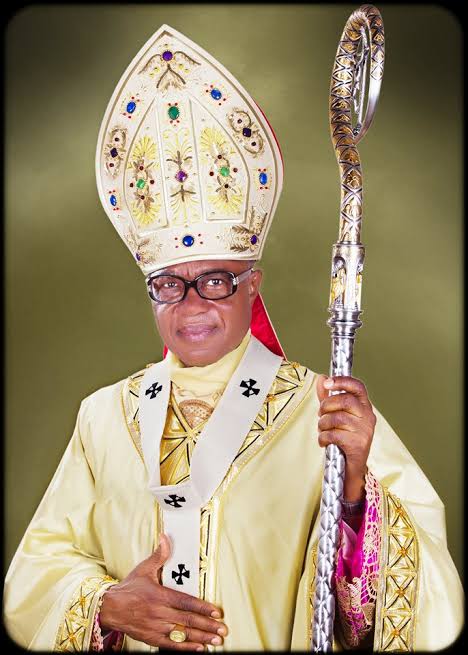
 Fr George Adimike
Fr George Adimike
Join our WhatsApp Channel
There is no gainsaying that steadily, the faithful are confronted with issues and realities that make them consider abandoning their Church. Though a sad reminder that things bear the imprints of imperfections and flaws on this side of eternity, it is not sufficient warrant to leave the Church. This holy Church of God is still peopled with sinful men and women who either are complacent in their evil ways or earnestly yearn for salvation. Yet, irrespective of claims to the contrary, leaving the Church approximates to abandoning God’s project, which entails religious irresponsibility. While some would abandon God completely, others would relate to Him according to their subjective whims and caprices that fall short of objective standards. Before leaving the Church, one should consider that indifference to or abandonment of a person’s special project or family is a subtle disregard, antipathy or rejection. Under the delusion that humans can serve God without the Church and the false claim that people do not leave God but man, these persons forget the corporate nature of religion, the social nature of worship and the communal nature of faith. No one is saved alone; the Lord saves His family, His people.
Notwithstanding one’s grievance against the ministers or agents of the Church or possible failures of her institutional structures, the Church remains, according to the eternal will of the Father, the agency of salvation. No one who is attentive to the Spirit will ignore the Church. Precisely, one has to take into cognizance that beings with bodies and biographies know and experience reality through the mediation of other analogous realities. Humans would not know God without the mediation of revelation embodied in organized religion. This revelation, which moved from creation, to the congregation of the just or ecclesia (church) from Abel, to the election of Israel, and which reached a definitive finality in Christ as the ultimate self-communication of God, is embodied by the Church.
A proper understanding of the Church, therefore, wrestles with historical and theological complexities, but to keep it simple, the Church is the assembly of the people of the Father gathered by the Son in the power of the Holy Spirit. The Church of God is a we-existence in Christ by the Spirit ― “a people assembled in the unity of the Father, of the Son and of the Holy Spirit” (Lumen Gentium, n.4). It is a communion into the Tri-in-unity of God and a bond of fellowship with all humans. As the Church registers her essence as the institutional representative of the whole Christ (totus Christus), she underscores herself as the fullness of man. Christ is the fullness of man realized because anthropology is perfected in Christology. Being human entails being of God, and according to the divine will, being of Him is expressed in belongingness to the Church. Since in spiritual matters, being and doing are not separable. In doing, being is expressed, and then one goes to the Church and becomes the Church. The malaise of abandoning or absenting oneself from the Church is an ancient problem (Heb. 10:25) in a new expression. There is no belonging to God without the demand and responsibility of the community of the faithful expressing it—that’s the Church.
Though the agents of the revelatory project and corporate worship can falter and fail, the institution (Church) remains a divine project which should not be denied or denigrated. No one can save himself. The experiences from various world religions show that religion binds humans to their fellows and deities. It has a corporate nature in its essence. What it was to be spiritual is social also. This social nature of the worship of God is presupposed in the social nature of existence itself. None of the created beings gives himself his language, culture, and the milieu of belief, action, prayer, experience and existence. No one is free from the social network, cultural constitution, and attendant constraints. Human beings cannot live without society, and being human is irredeemably interwoven with society.
The interweaving of human persons to form society accords with the divine will. In His creative wisdom, the Creator underscores the impropriety of a human person without society ― “it is not good for man to be alone” (Gen. 2:18). In response, God created the first society by creating Eve to form it with Adam. Hence, humans live as a society and individually carry out their existential project as a social body. The creation reveals the dependence of all on society and the institution it offers for our worship of God. It is practically inconsistent with human reality to neglect this social nature with its consequent corporate memory in one’s grope and search for meaning. One fools and deludes himself for nothing, for the individualism that separates self from society is only delinking one’s soul from the soil, leaving it rootless and superficial. How can there be a profound supernatural connection without deep roots? In such a situation, self-worship externally projected to the divine will displace true worship of God. Unfortunately!
Though He does not need our worship, His children adequately and meritoriously worship God as a family ― a community of faith and love, and He saves humanity as a whole. He wills the existence of the Church, knows all the flaws of the members of the Church, and still retains her agency. The rejection of the Church is a sort of subtle rejection of the divine project. Christ knew that the Church would be peopled by saints and sinners and still identified with her (Acts 9:4-5). St Paul knew of the sinfulness of the members of Christ and still taught the theology of the Church as the body and bride of Christ (cf. Eph. 3:6, 5: 23-25; Col. 1: 18, 24). It is not wise to abandon one’s stake in a company for the bad behaviours of the superiors or colleagues. Indeed, no one cures a headache by cutting off the head. How can the sick abandon the hospitals because of the evil of healthcare workers? Leaving the Church is abandoning Jesus and his divine project. There is no justifiable reason to abandon Christ, not even because of Judas, John, Joan or Justina. The Church is God’s instrument for in-penetrating the world with His munificence, and whoever leaves the Church of Christ abandons God for self.
Fr George Adimike
findfadachigozie@gmail.com